
Life is a little electric current
Mae-Wan Ho
A few years ago, I gave a presentation on the concept of brain death. At the end of the session, someone in the audience asked me, “What is the time of death?” She wanted to know which moment should be recorded as the time of death for a person who is brain-dead but still has a beating heart. In a reflective mood, I replied, “The time of death is when there is no love”
We don’t love in order to live, we live because we love
What does being alive mean? A leaf is alive when it is a part of a plant and it belongs to the realm of death the moment it is plucked. What happens at the time of death? What features differentiate a living being from a non living thing?
Genetic material and complex molecules that form the three dimensional structure of a living being do not define life. DNA is a wonderful aperiodic polymer, yet, it is not alive by itself. Life is not something that is static, it is a phenomenon characterized by flow of energy and its transformation. Like a burning candle, life burns energy continuously and undergoes gradual predestined transformation in its structure from birth to death. An average human body, even in a state of rest, burns approximately 100 joules of energy per second to maintain life. It is equivalent to the energy consumed by a 100 watt light. Every cell in the body actively ‘lives’ by flowing energy through it. Death begins once this flow of energy stops. Some cells require a high energy to remain alive(brain cell) and the process of death begins a few seconds after termination of the flow: blood and energy.
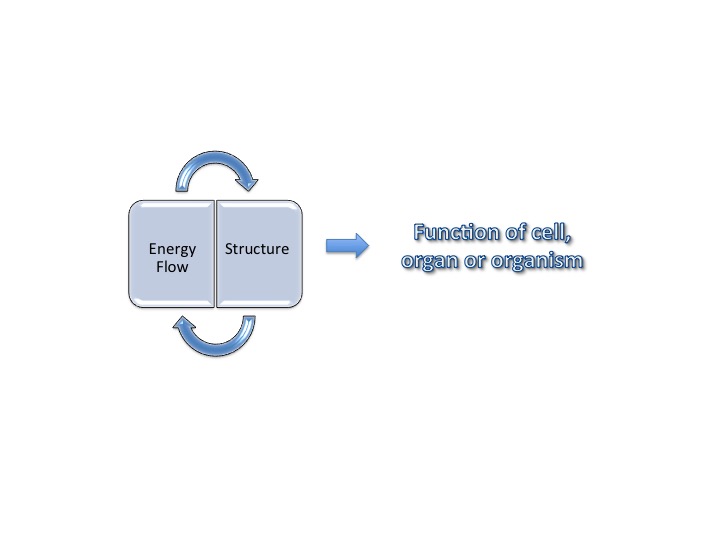
An organism that is alive possesses two defining properties: a complex, unique three‑dimensional structure and a continuous flow of energy. The organism’s structure determines the pathways of energy flow, and in turn, this flow sustains the integrity of that structure. The function of a cell, organ, or whole organism arises from this delicate interdependence between structure and energy flow—a hallmark that separates the living from the lifeless.
Energy is constantly expended to preserve a structure that would otherwise collapse under the chemical and electrical disequilibrium between the cell’s internal and external environments. It is this maintained disequilibrium(disorder), held in steady state, that enables every function of life: A precise degree of disequilibrium that nurtures organization and gives rise to life. When the body loses the ability to flow energy, the disequilibrium fades, the organized structure begins to break down, and gradual spontaneous decay restores matter to its elemental form. Death, therefore, is a process that unfolds naturally once the flow of life ceases—the decomposition of complex order back to its components.
A diamond, though structurally exquisite, neither flows energy nor alters its form with time. It endures unchanged, embodying timeless beauty yet lifeless stillness. An aircraft, by contrast, contains millions of structural components and channels for energy flow. Yet when its power is cut off, it does not spontaneously disassemble the way living systems do. It merely shuts down and can be restarted, for its integrity depends not on energy flow but on mechanical nuts and bolts. Thus, I would not call it alive, for what truly lives must also possess the capacity to die in the way that life does.
If the human body did not rely so fundamentally on a continuous flow of energy to preserve its structure, then we could simply “shut down” when the heart stops and resume life once it beats again. Unfortunately, our structural integrity depends on uninterrupted energy flow—not on intermittent bursts. The brain begins to undergo spontaneous disassembly within seconds of energy loss, and within minutes, irreversible damage occurs. With that disintegration, the ‘Self’ vaporizes. Restoring every element to its precise original order is impossible; once that pattern is lost, the individual cannot be recreated. Even if the heart resumes beating after a few minutes, the skin, muscles, and bones may remain viable—but the brain, and the person, are gone.
The same process occurs in a leaf once it is plucked. The moment it is detached, the flow of energy ceases, marking the beginning of its death. From that point onward, the leaf undergoes gradual, spontaneous disintegration. If an insect consumes the dying leaf, then its elements will be incorporated into the structure of another organism that still has the capacity to flow energy i.e still ‘alive’.
Out, out, brief candle!
Macbeth
Biothermodynamics or bioenergetics is the study of energy flow within living systems. Our understanding of health and disease has long been shaped by a structural perspective of biology—we tend to view biological organization primarily in terms of form and architecture. Disease, accordingly, is often defined through the lens of “structural injury.” Such injury may result from infection, trauma, burns, hypoxia, immune reactions, cancer, or other causes. We further classify structural injury by its visible manifestations—on imaging, under the microscope, at the molecular level, or through its impact on cellular and organ function. Yet, in doing so, we have overlooked a vital dimension of life itself: the dynamic flow of energy.
1.Can a more precise understanding of the direction and magnitude of energy flow through a cell and its supporting structures deepen our insight into the health and disease states of an organ?
2.Can deliberate modulation of energy flow support healing and recovery? In other words, can a deeper grasp of this fundamental facet of life open an entirely new dimension in medical therapeutics, transforming how disease is diagnosed and treated?
The boundaries which divide Life from Death are at best shadowy and vague. Who shall say where the one ends, and where the other begins?
Edgar Allan Poe

 sureshmanickavel.com
Again an excellent article Suresh. Gives an insight into life and science from a lay (law) man point of view…
But I would substitute Romantic rather than Philosophical in the first para because u bring romance there.. but u may call Philosophical when u say the time of death should be when we stop living ..
LikeLiked by 1 person
Agreed Anna. I wouldn’t dare to disagree with the lawyer especially if he is on my side.
LikeLike
Awesome Suresh… really fantastic!!!
LikeLiked by 1 person
Super boss…. adding another perspective to how life and death are defined. Nice read indeed.
LikeLiked by 1 person
Enjoyed the flow of life, Suresh.
LikeLiked by 1 person
You mean ‘enjoying’ the flow of life…
LikeLike
Great articulations of the thoughts that rise in once mind. You steal the show, when you start connecting physics with biology like structure of Molecules/DNA with aircraft and carburetor (Mustang) with Kidney!!
LikeLiked by 1 person