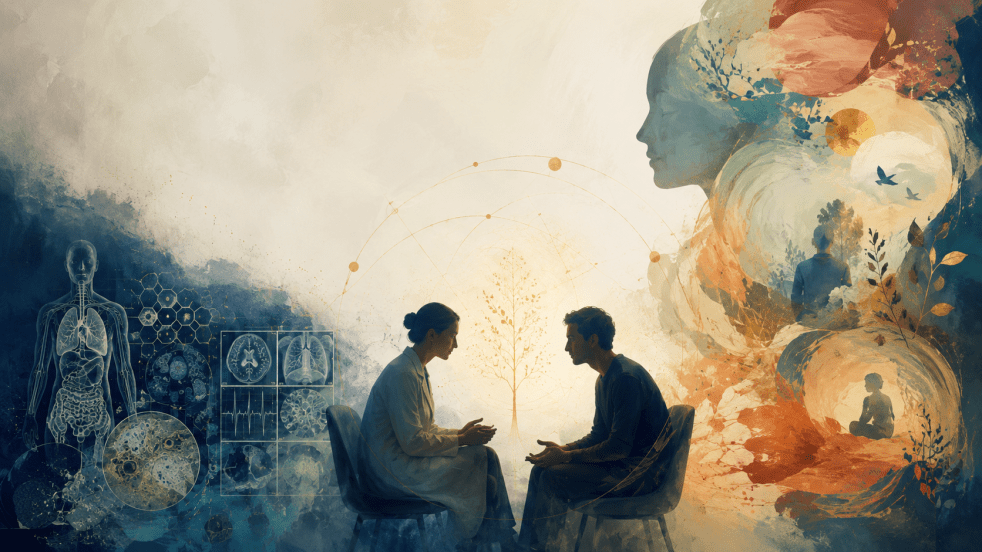
I propose a conceptual framework that distinguishes disorder from disease by contrasting the third-person and first-person perspectives.
A disorder is defined from a third-person perspective. It is an observed entity. A condition qualifies as a disorder when its structure, function, or expected natural history deviates from an established biological or clinical standard. It is an objectively identifiable abnormality, regardless of whether it causes suffering or requires intervention.
A disease, in contrast, is defined from a first-person perspective. A disorder becomes a disease when it results in distress to the individual, either through signs or symptoms, impaired function, or the perception of an immediate or future threat to an organ or to life. Thus, the lived experience of the affected person becomes central to the definition of disease. A person, his suffering and the underlying disorder are encompassed by the concept of disease. A disorder can be studied in isolation, without any knowledge of the individual in whom it occurs; a disease cannot be fully understood, and certainly cannot be treated, in the same way.
Within this framework, a condition like coronary atherosclerosis detected incidentally on a CT calcium score is objectively a disorder. Whether it should also be considered a disease depends on the shared perspective of the individual and their physician regarding the significance of the condition and its future cardiovascular risk. Some individuals, together with their physicians, may judge the risk to be sufficiently low that no intervention is warranted. Others may view the condition as a meaningful threat to future health and choose preventive treatment. This example illustrates that when a condition is regarded as a disease primarily because of its potential to cause future organ damage or threaten life, the designation of disease depends on a shared understanding (second-person perspective through empathy) between the patient and physician of the magnitude and clinical significance of that risk.
Homosexuality illustrates the distinction between a disorder and a disease. If a disorder is defined solely as a deviation from an established biological or statistical norm, independent of distress or the need for treatment, then homosexuality could be viewed as a disorder from a third-person perspective. However, for an individual who experiences no distress or functional impairment, it would not qualify as a disease. The diversity of views regarding homosexuality largely reflects differences in how the third-person concept of disorder is defined. There is often no universal agreement on what constitutes a biologically or statistically meaningful deviation, and this lack of consensus contributes to ongoing social disagreement about the phenomenon.
In some circumstances, the term normal variant is used when there is broad consensus that a structural or functional deviation is clinically insignificant and does not meaningfully affect health or well-being. Such conditions are generally not regarded as disorders, reflecting agreement that the observed variation falls within the spectrum of normal human diversity. This framework may also be applicable to other conditions, such as benign tumors, cystic changes, aging and genetic abnormalities. These may be objectively identifiable disorders, yet they may not be experienced as a disease.
Physicians bridge objective and subjective realities by combining knowledge of the underlying disorder with empathic understanding of the disease experienced by the patients to guide care: It is not always possible to cure, but we can always care.


